


This post may contain affiliate links which means I may receive a commission for purchases made through links. Learn more on my Private Policy page.
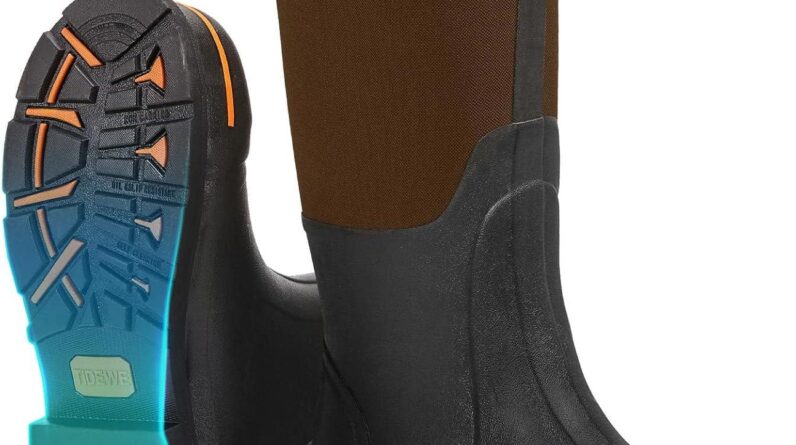
If there’s one piece of gear we refuse to compromise on, it’s our boots. Long, wet days have a way of exposing every weakness in your footwear-whether that’s aching arches by lunchtime, cold toes before sunrise, or that slow, creeping damp that tells us “waterproof” was more of a suggestion than a promise.With the TIDEWE Rubber Work Boot for Men, we went in expecting a straightforward, no-frills workhorse: steel toe, steel shank, 100% rubber and 6mm neoprene, billed as waterproof, anti-slip, and suitable for everything from construction sites to muddy fields and winter chores.On paper, it sounds like the kind of boot that should live by the back door, ready for whatever the day throws at us.
Over several weeks, we put these boots thru our usual rotation-muddy ground, slick surfaces, cold mornings, long shifts on our feet-to see whether they’re just another budget work boot with big claims, or a genuinely practical option that can replace more expensive brands. Along the way, we noticed the same split many buyers mention: excellent comfort and warmth, but questions around long-term durability and how reliably “waterproof” they really are.
In this review, we’ll walk through how the TIDEWE Rubber Work Boot actually feels on foot, how it handles real-world conditions, where it impressed us, and where it fell short-so you can decide if this is the right boot for your work, your climate, and your budget.
Our First Impressions of the TIDEWE Rubber Work Boot for Men
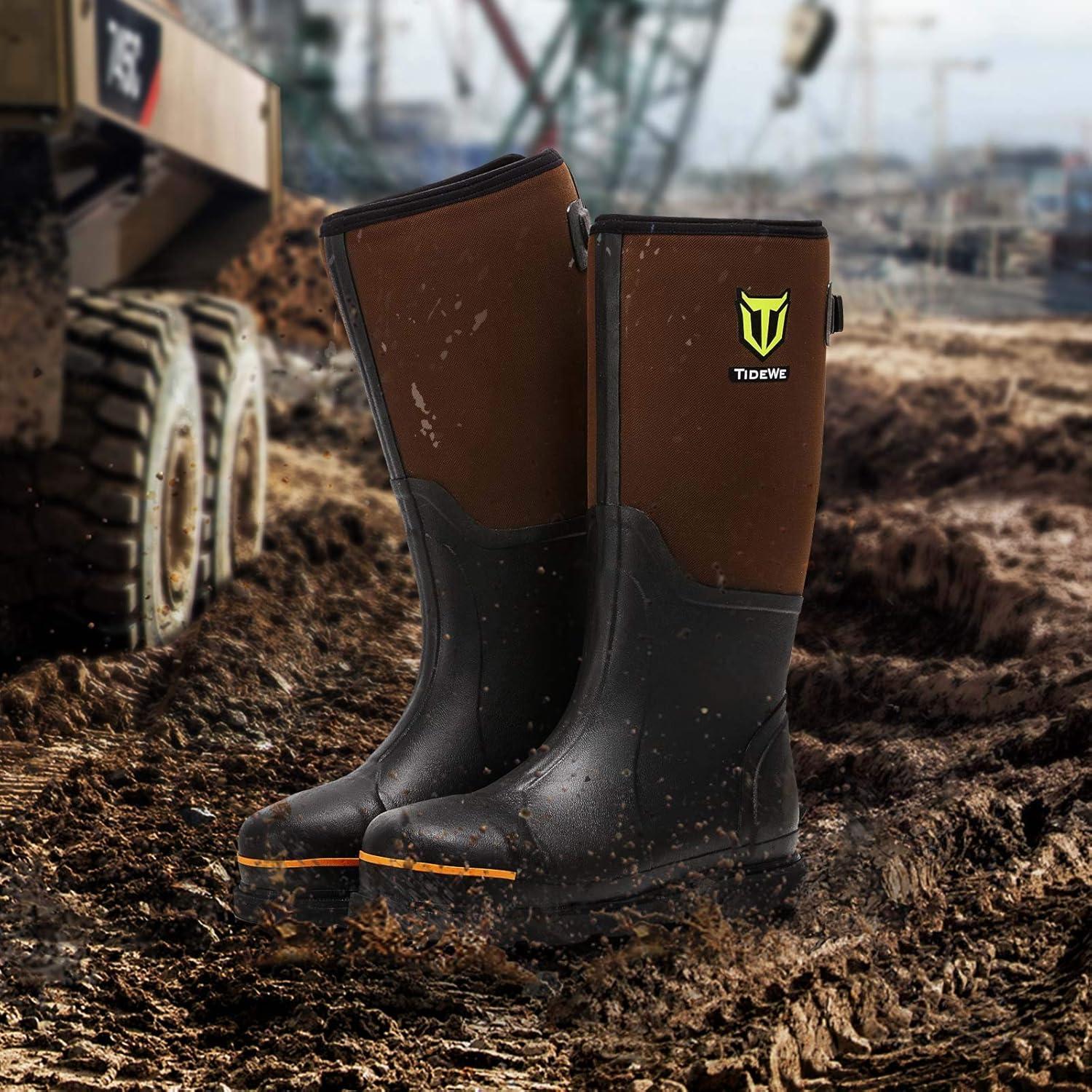
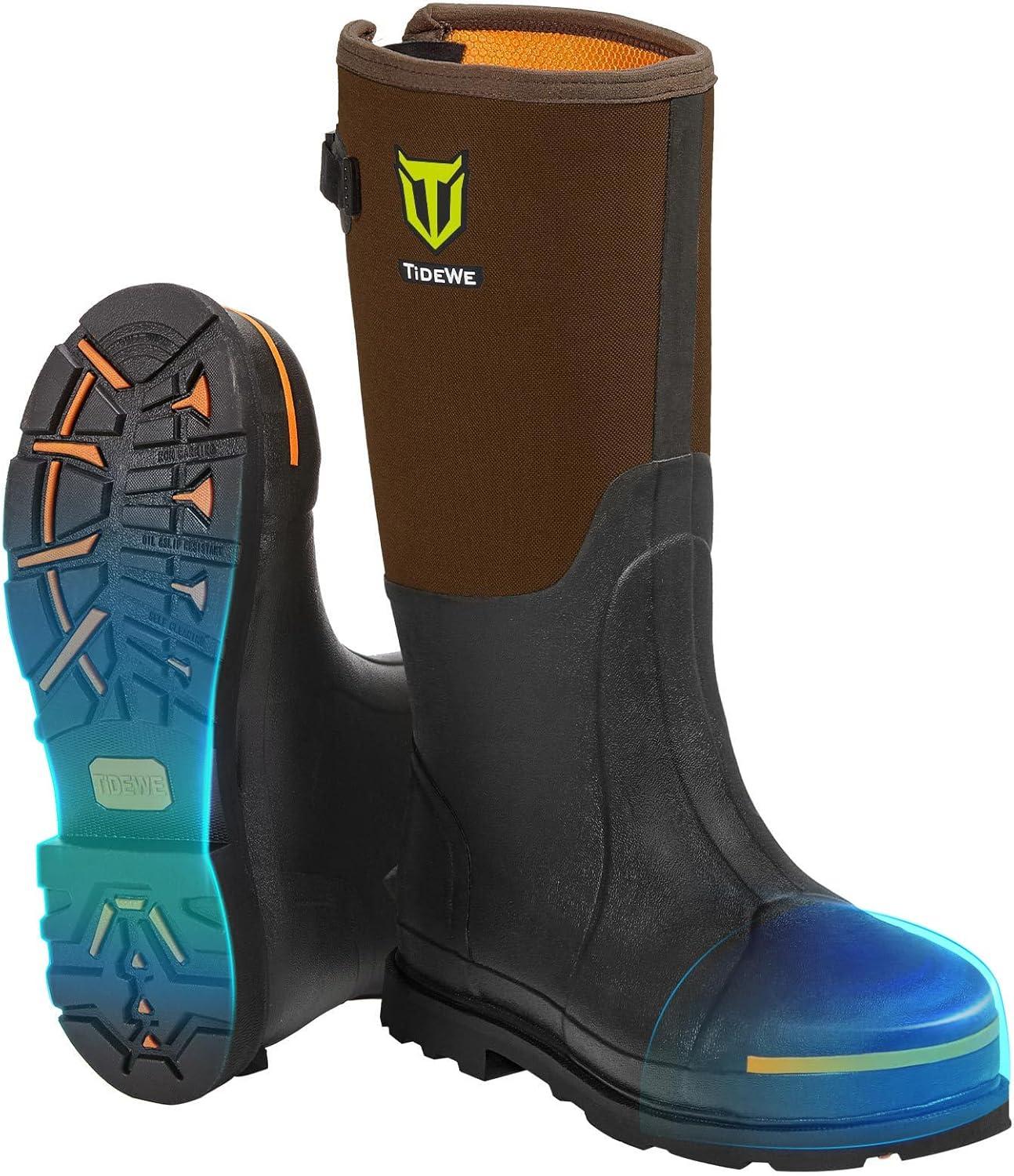
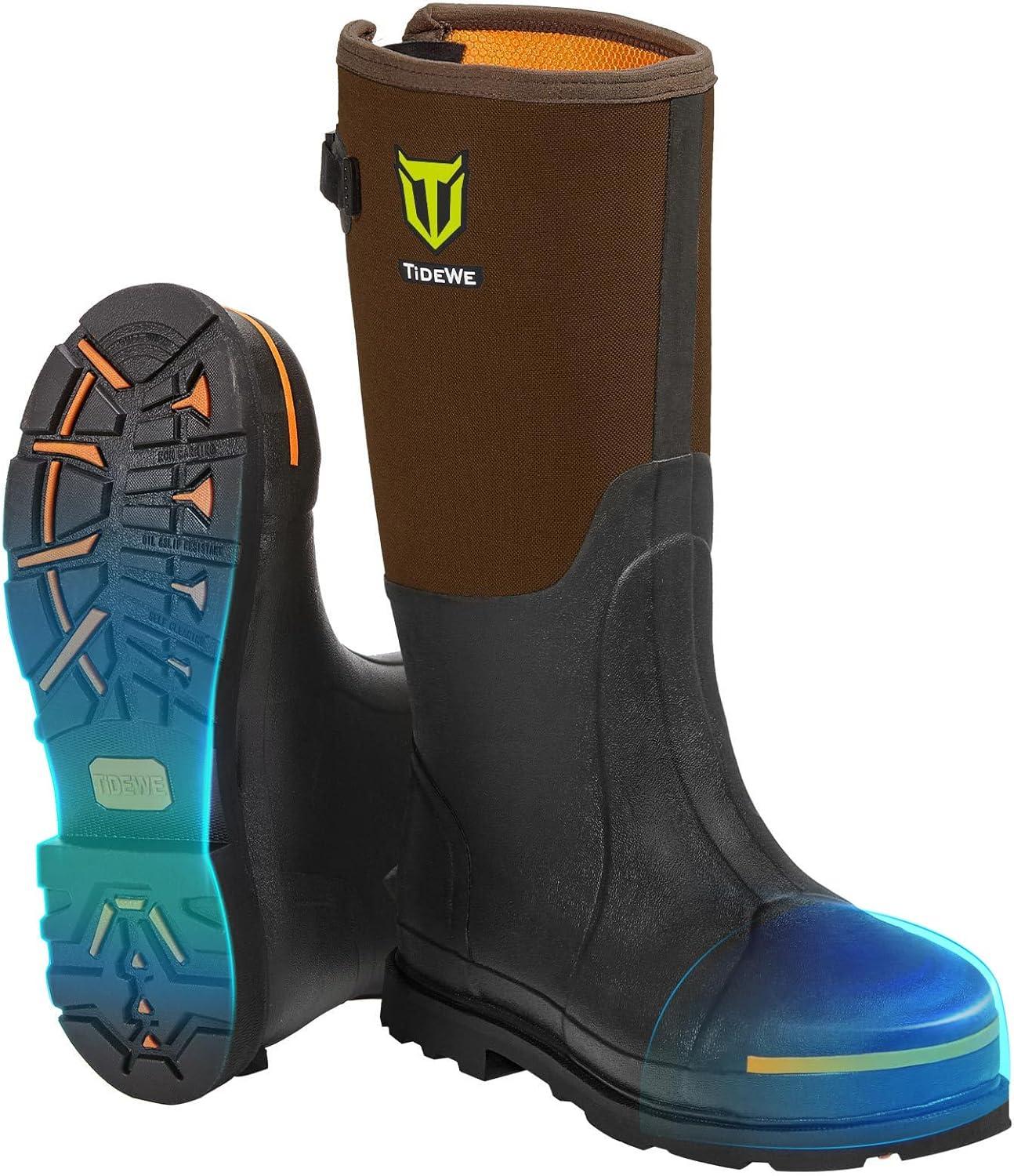
As soon as we slipped these on, the first thing we noticed was the plush 6mm neoprene lining and the snug, insulated feel around the foot and calf. The interior doesn’t feel clammy or plastic; instead, it’s surprisingly breathable, and our feet stayed warm without overheating during light outdoor work. Underfoot, the steel shank gives a firmer, more supportive platform than a typical rubber boot, so standing or walking for long stretches feels more like wearing a sturdy work shoe than a floppy pair of wellies. The steel toe box has a reassuringly solid presence without digging into our toes, and the deep tread bites into mud and wet ground with confidence. That said, we can feel the weight of the safety features, so these don’t give the feather‑light sensation of a casual rain boot.
Build-wise, the rubber shell and neoprene upper look and feel robust at first glance, with clean seams and a finish that suggests serious job‑site use. We do, however, notice the potential weak point where rubber meets neoprene; it’s an area we’ll be watching over time, especially given some reports of splitting and leaks. On fit, our early impression is that the boots lean slightly roomy, which may be a plus for thick winter socks but could feel large if you’re between sizes. For now, we’re impressed by the mix of comfort, warmth, and protection offered right out of the box, especially at this price point, but we’re reserving final judgment on long‑term durability and waterproofing performance.
- Best for: Farm work, construction sites, muddy yards, cold‑weather chores
- Standout traits: Warm neoprene lining, steel toe & shank, aggressive tread
- Potential concerns: Mixed user feedback on long‑term durability and leaks
| Comfort | Cozy, supportive, good for long shifts |
| Warmth | Well‑insulated, winter‑ready |
| Protection | Steel toe, steel shank, reinforced shell |
| Traction | Deep lugs for mud and slick ground |
| Fit | Slightly roomy; socks or sizing down may help |
Check today’s price and see all sizing options on Amazon
Living With These Boots Daily Design Durability and Comfort
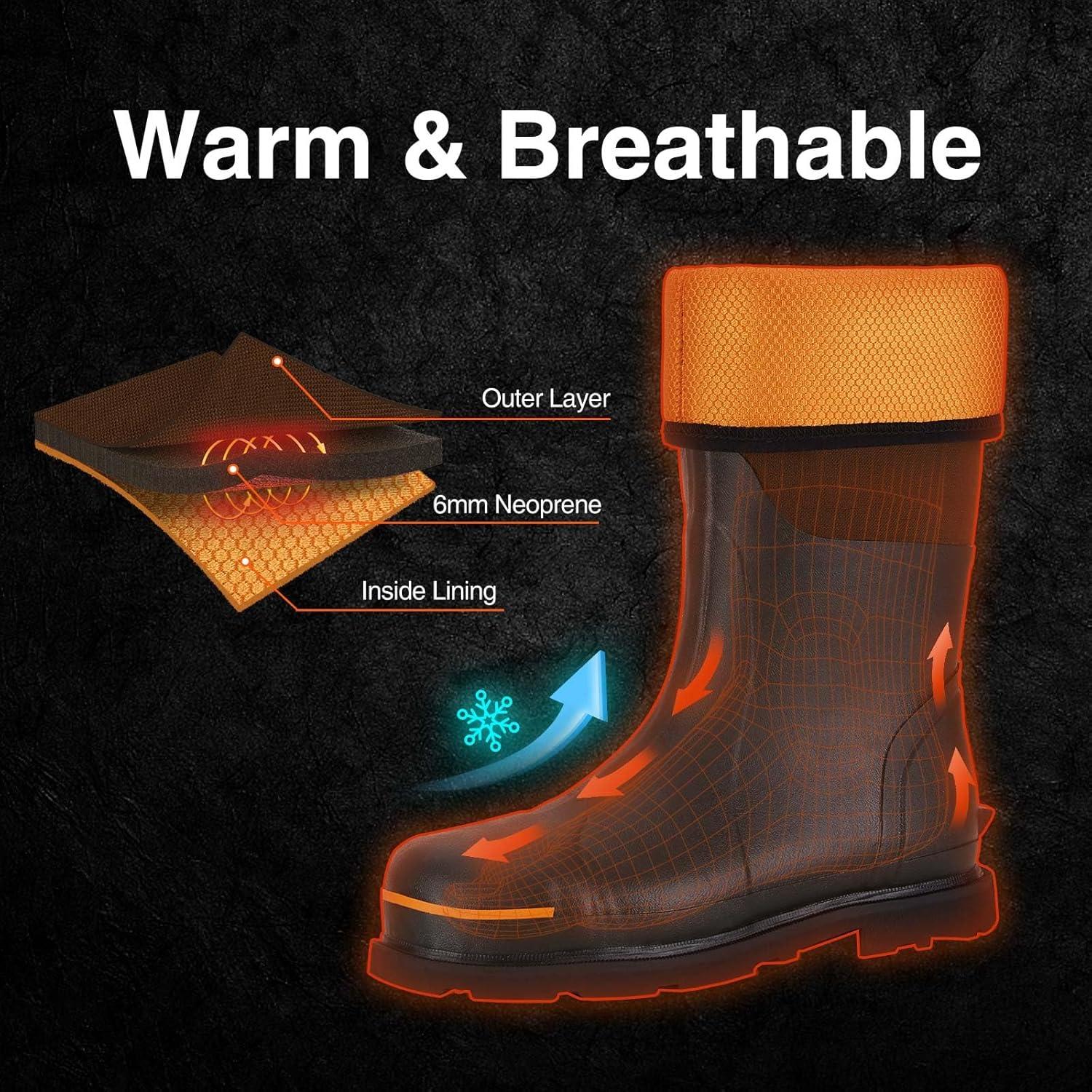
Wearing these day in and day out, we notice how the design choices show up in real life. The tall rubber shell shrugs off mud and slurry, while the 6mm neoprene wraps our calves in a snug, insulated sleeve that blocks wind and cold without feeling like a wetsuit. The steel toe and shank give us confidence around rolling stock and dropped tools, and we appreciate that the reinforced toe and heel don’t feel bulky when we’re climbing equipment or stepping in and out of trenches. On the comfort front, the breathable lining keeps our socks from turning into a sauna on mild days, and the ergonomic arch support means we can log 10-12 hour shifts with less end‑of‑day foot ache than we expect from many rubber boots. We do find the boots a bit on the heavy side, and the fit can run roomy, so thick work socks or going down half a size (where possible) can make them feel more locked in.
| Daily Use Snapshot | Our Take |
|---|---|
| Comfort over long shifts | Impressive cushioning and arch support |
| Warmth in cold, wet weather | Neoprene insulation keeps feet cozy |
| Weight | Noticeably heavy but stable |
| Durability | Mixed: shell is tough, seams need watching |
| Waterproofing | Great when seams stay intact |
Where these shine is in rough, messy work environments-construction sites, farms, and fishery docks-where deep‑tread rubber soles bite into mud and slick concrete, and the tall shaft keeps slush from spilling over the top. Still, we stay realistic: reports of tearing at flex points and leaking seams remind us that hard daily use can expose weak spots faster than casual weekend wear.We treat them as serious work gear: rinsing off mud, avoiding sharp edges when possible, and hanging them to dry to prolong the life of the rubber and stitching. For us, the balance of comfort, protection, and price makes them compelling provided that we accept that they may not last forever under brutal conditions. If that trade‑off works for you, it’s worth taking a closer look and seeing current pricing and sizes available on amazon here.
Putting Safety First Steel Toe Protection Grip and Waterproof Performance
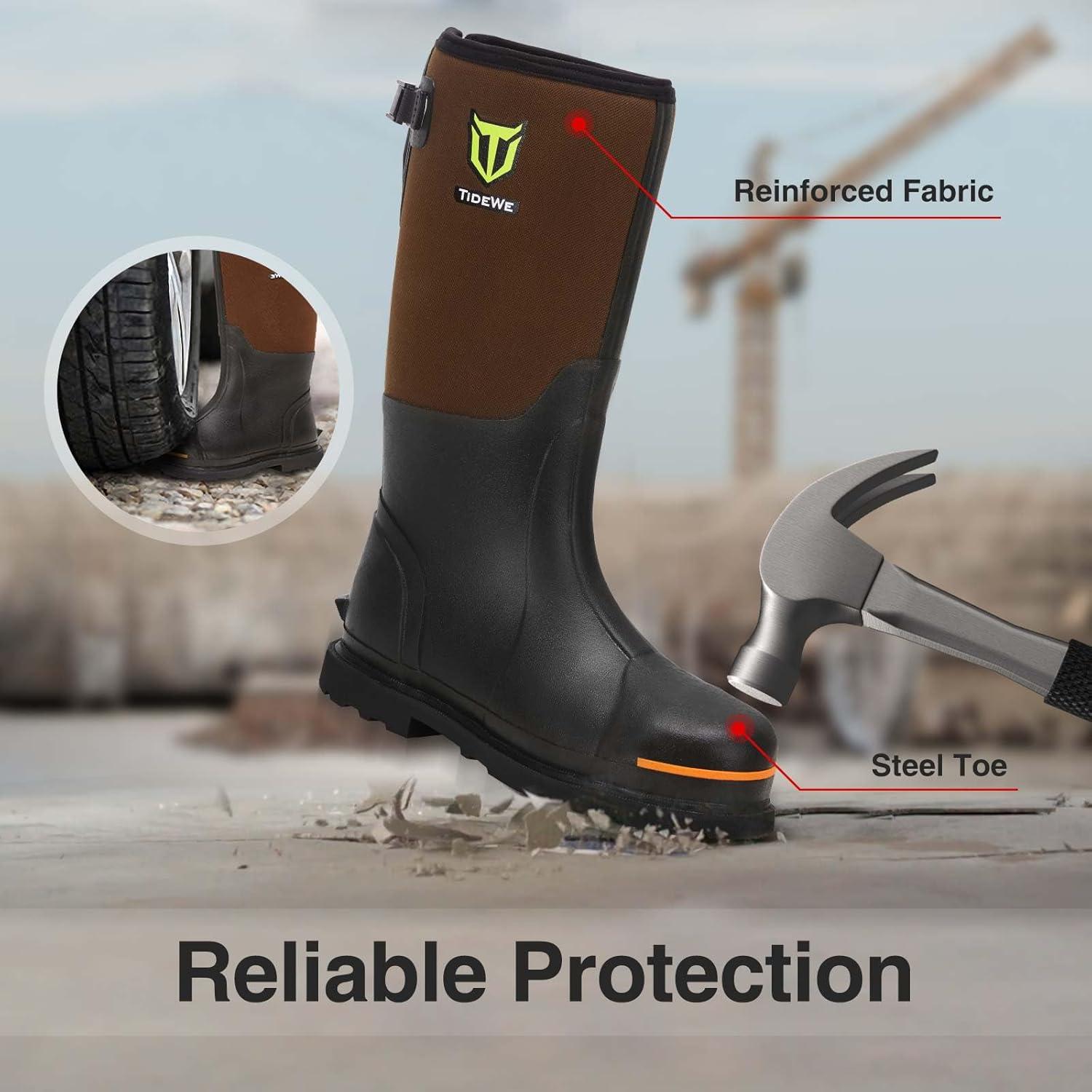
The safety story here starts from the ground up. We get steel toe protection that feels genuinely ready for unpredictable job sites, backed by a steel shank that supports the arch when we’re climbing ladders, working rebar, or trudging through furrows all day. The reinforced rubber shell over the toe and heel adds another layer of defense against scrapes and impacts, and while the boots are on the heavier side, we find that weight translates into a sense of solidity many cheaper options lack. For those of us in manufacturing, construction, or farm work, the combination of impact resistance and underfoot support gives us the confidence to walk through cluttered, uneven, or debris-strewn areas without constantly watching every step.
- Steel toe for impact and crush protection
- Steel shank to guard the midfoot and reduce fatigue
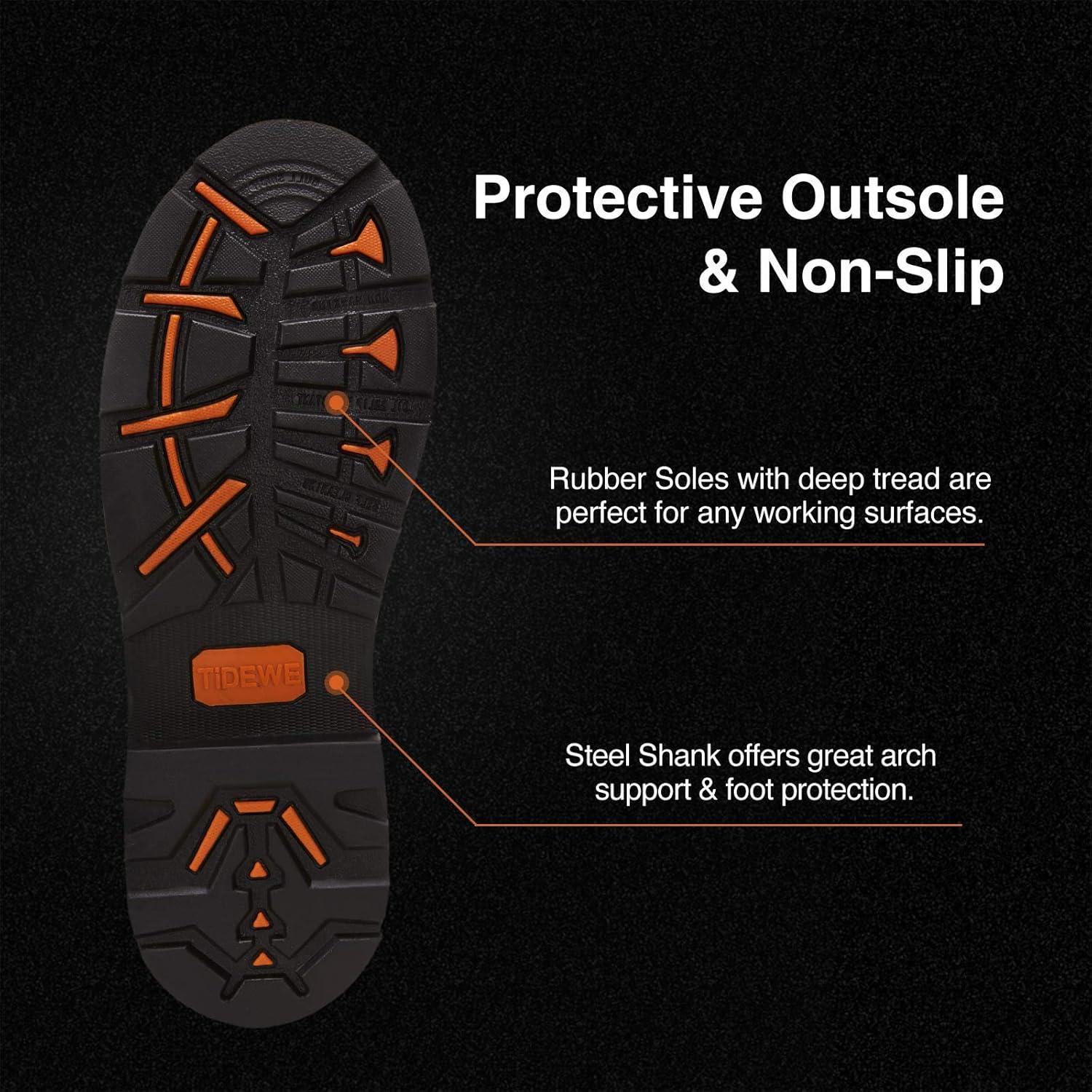
- Deep-tread rubber outsole for grip in mud and wet work zones
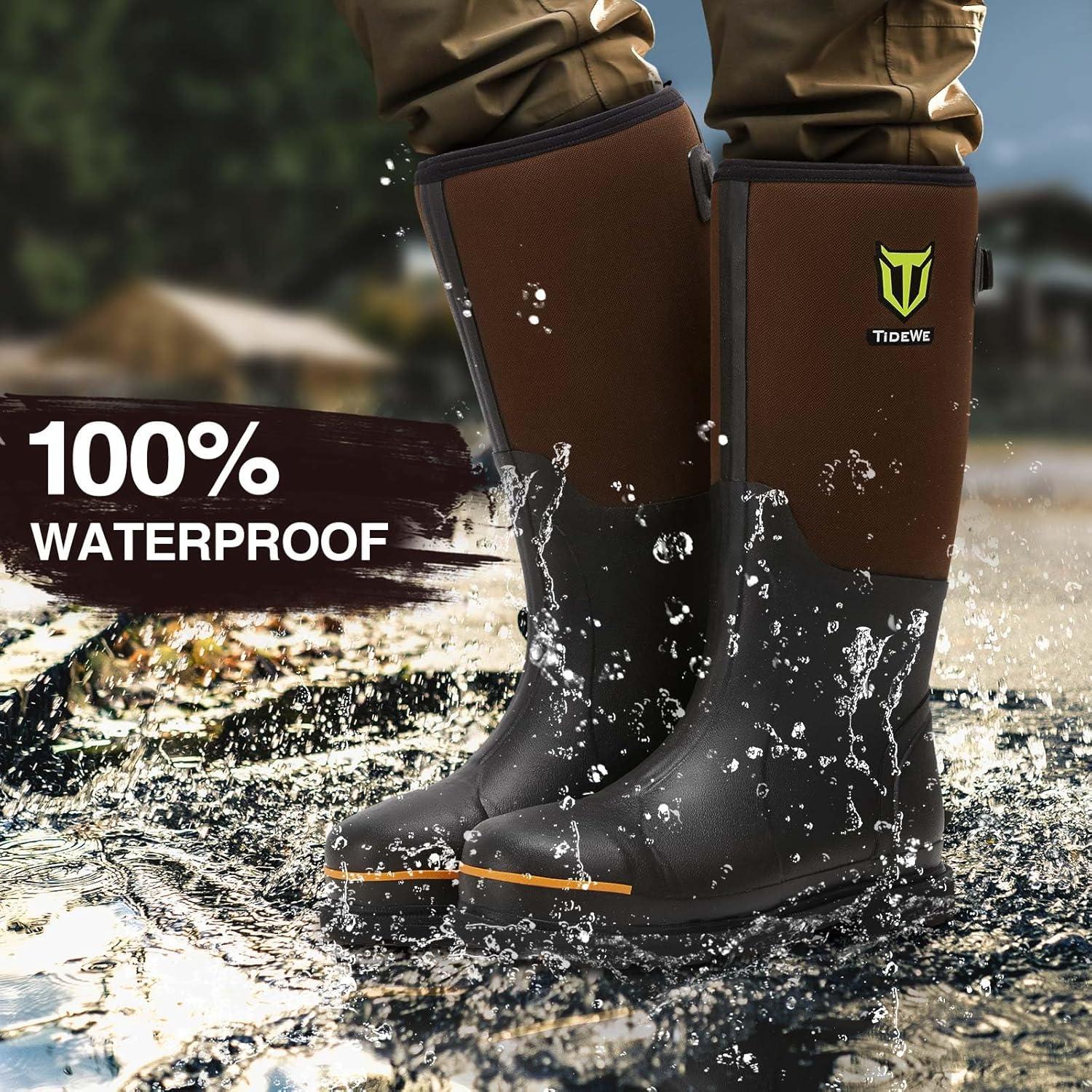
- 100% rubber & neoprene upper designed to block out water
- 6mm neoprene to keep feet warm in cold, damp weather
| Safety Feature | What We Notice |
|---|---|
| Toe & Shank | solid impact protection and arch support on long shifts |
| Grip | Deep lugs bite into mud and slick ground, though some users still report slips on very smooth, oily surfaces |
| Waterproofing | Rubber and neoprene keep most of us dry, but seams can be a weak spot for heavy, daily soaking |
| Cold-Weather Use | Insulated enough for winter farm chores and long, wet construction days |
On the grip and waterproof front, the outsole’s deep tread is a clear advantage in mud, slush, and loose soil, giving us a secure footing when we’re hauling gear or pushing through rutted ground. We appreciate that many users report dry, warm feet through rain, snow, and standing water, especially during all-day shifts outdoors. Simultaneously occurring, reviews also highlight that heavy, constant exposure and flexing at the rubber-neoprene junction can lead to splits or leaks over time, so we’d treat these as robust work companions that still benefit from basic care and inspection.For the price point, the balance of traction, insulation, and impact protection is compelling if we’re willing to trade a bit of lightness for sturdier safety.
Check current price and safety features on Amazon
Who These TIDEWE Work Boots Are Really For and How We Recommend Using Them
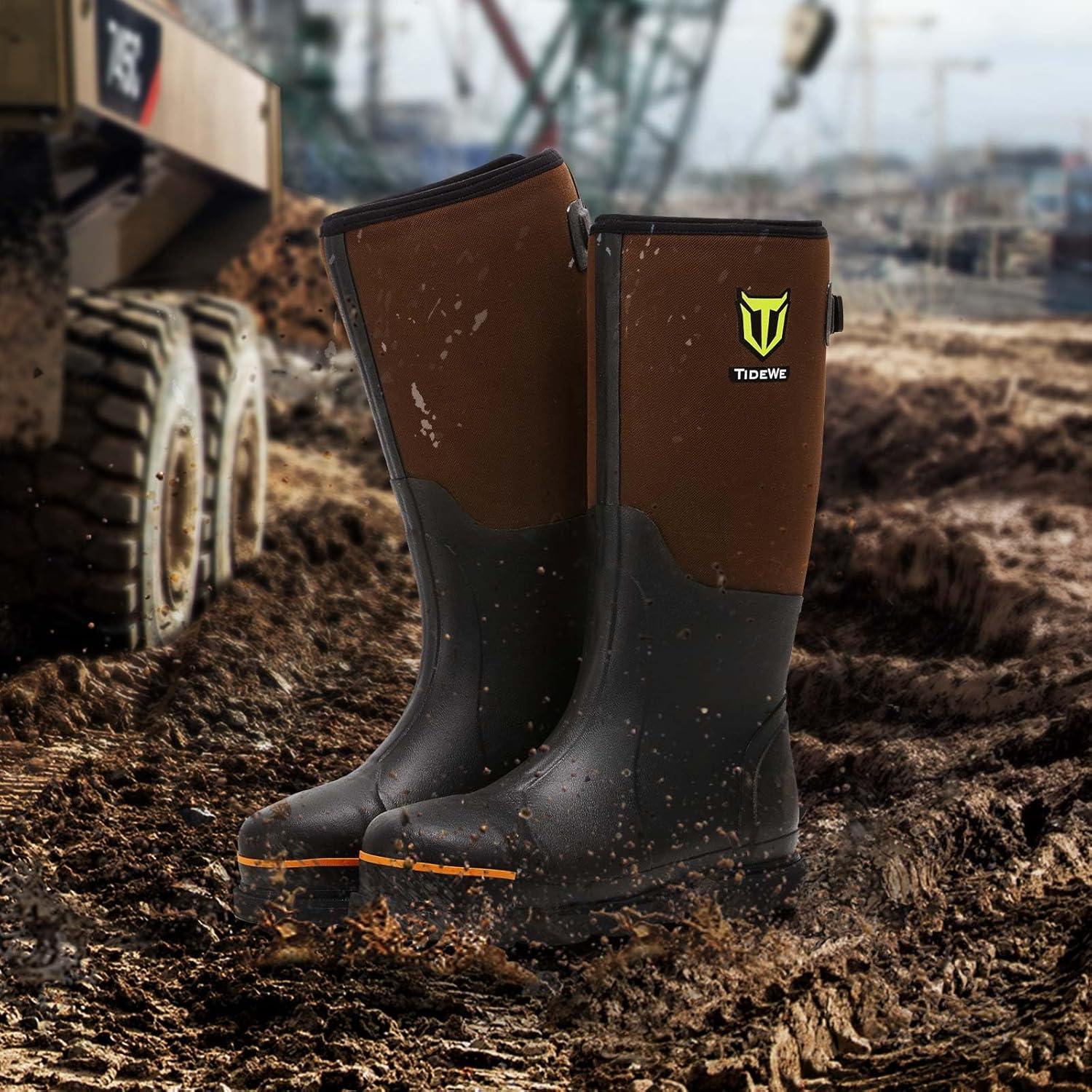
If we boil down the reviews and our own impressions, these boots make the most sense for people who need serious toe protection, warmth, and traction more than they need ultra-lightweight versatility or years-long durability. They shine for farm work, construction sites, muddy yards, fishing trips, and long wet days where we’re standing or walking for hours and want our feet to stay cozy, supported, and relatively pain‑free. The steel toe and shank combo, together with the reinforced rubber shell, suits us if we’re regularly dealing with tools, livestock, stacked materials, or debris that could roll or fall. We’d also recommend them for cold‑weather chores and winter hunting, where the 6mm neoprene insulation is a real advantage and many users report toasty, cozy feet.
| Best For | Think Twice If… |
|---|---|
|
|
To get the best from them, we’d use them as daily drivers in wet, messy conditions, but still inspect seams and the flex point where the boot bends; that’s where some users report tears. Because sizing feedback is mixed, we’d read the size chart carefully and consider going half to one size down if we’re between sizes or used to roomier brands. For us, they work best when we accept them as a warm, protective workhorse with great comfort and value, not as an indestructible, forever boot. If that balance fits what we need from our next pair, we’d confidently grab them here: Check Today’s Price & Availability on Amazon.
Customer Reviews Analysis
Customer Reviews Analysis
To understand how the TideWe Steel-Toe work Boots perform beyond the spec sheet,we dug into dozens of customer reviews from people who actually wear them on farms,boats,construction sites,and weekend fishing trips. the sentiment leans strongly positive, with recurring praise for comfort, warmth, and waterproofing, and a smaller but notable cluster of concerns around weight, stitching, and sizing consistency.
Overall Sentiment at a Glance
| Aspect | Customer Mood | Key Takeaway |
|---|---|---|
| Comfort | Very Positive | All-day wear without foot pain |
| Waterproofing & warmth | Mostly Positive | Dry, warm feet in mud, snow & cold; a few leak issues |
| Durability | Mixed to Positive | Holds up well for many; some seam/gash complaints |
| Weight | Mixed | Expected heft for steel toe; some find them “heavy as heck” |
| Sizing & Fit | Mixed | True to size for most; no half-sizes and a few inconsistencies |
| Value | Very Positive | Seen as a bargain vs. pricier brands |
Comfort & All‑Day Wear
Comfort is clearly the star of the show. Several reviewers report wearing these boots for long, punishing shifts-10 hours a day, walking more than five miles-and still finishing without sore feet. One long-term user who has worn them “nearly every day” for eight months describes them as “very comfortable,” noting no foot pain despite extensive walking on the job.
On farms and in construction,users echo the same theme: the boots fit well,feel good out of the box,and offer enough cushioning to get through a full day in mud,trenches,or fields.Steel toe boots often trade comfort for protection, but most reviewers feel TideWe strikes a better balance than many more expensive brands.
Waterproofing, Warmth & Traction
In wet and cold environments, the feedback is largely reassuring. Farm workers, maple syrup producers, and winter users consistently mention that thier feet stay “warm and dry all day,” even in wet, muddy trenches or snowy conditions. The 6mm neoprene lining appears to do its job in insulating against cold and damp.
Traction is another highlight. Users working on icy farmyards or walking river rocks for fishing note that these boots grip well, reducing slips and falls. One reviewer mentions that the boots “help when there is ice for no falls,” while an avid camper and angler praises the secure footing over river stones.
Having mentioned that, not everyone has a perfect waterproof experience. at least one reviewer reports a serious leak along a seam, where standing in water led to boots “entirely filled” due to poor stitching. This suggests that while the majority enjoy solid waterproof performance, quality control on seams and joins is a potential weak point.
Durability & Build Quality
Durability feedback is generally positive but not unanimous. On the strong side, we see users wearing the boots nearly daily for eight months, including in tough outdoor conditions, and reporting that they are “still in good condition” and outperform more expensive competitors.
We also see repeat buyers-third and even fourth pairs ordered-which suggests that, for many, these boots last long enough to justify buying them again.Farmers and outdoor workers in particular label them “money well spent.”
However,a few critical notes surface.One user, after about three months of daily boat work, discovered a “giant gash” on the top of a boot, without any clear impact event, raising questions about how resistant the rubber is to cuts or material fatigue. Another reviewer worries that ”the junction between the rubber and the neoprene part… appears to be weak,” hinting that this seam could be a long‑term failure point. When we compare these comments, we see that durability is generally acceptable for the price, but not on par with ultra-premium work boots that last decades.
Weight & Steel Toe Feel
The steel toe and shank bring protection but also bulk. Several customers remark that the boots are “a bit heavy” or even “heavy as heck.” That said, others qualify this by saying the weight is reasonable “considering their steel toe is pretty heavy” and that the boots still feel comfortable in daily use.
We can read this as: if we are coming from light hiking boots or sneakers, the TideWe will feel noticeably heavier. If we are already used to industrial-grade steel toe boots,the weight is within expectations,but long days on our feet will still remind us we’re wearing serious protection.
Sizing, Fit & Ordering Experience
Most reviewers report that the boots “fit true to size,” which is encouraging for online buyers. However, not everyone’s experience is straightforward. One user ordered a size 9 that was too big, then a size 8 where “one boot was bigger than the other,” suggesting a manufacturing or quality control glitch.the replacement pair was acceptable, but the hassle is worth noting.
Another pain point is the lack of half sizes. A reviewer specifically wishes for a size 7.5, saying that would be the ideal fit. Without half sizes, some buyers will be forced to choose between slightly loose and slightly tight.
we also see at least one serious shipping or fulfillment error: an order placed for a men’s size 16 arrived as a size 12,which is a major discrepancy and renders the boots unusable for that buyer. while this speaks more to logistics than the product itself, it does color the overall customer experience.
| Fit Feedback | Customer Experience |
|---|---|
| True to size | Most users, including all‑day workers |
| Runs large | Some needed to size down |
| No half sizes | Frustrating for in‑between feet |
| Quality control issues | Mismatched boot size, wrong size shipped |
Use Cases: Where They Shine
The reviews paint a clear picture of where these boots really earn their keep:
- farming & Agriculture: Multiple farm users rave about waterproofing, traction on mud and ice, and comfort during long outdoor days. Families even report buying multiple pairs over time for husbands and sons.
- construction & Trades: Construction workers in and out of “wet,muddy trenches” appreciate staying warm and dry without sacrificing too much comfort,even with the steel toe.
- Outdoor work & Industry: Users in manufacturing-style roles and 10‑hour outdoor shifts report consistent performance and comfort.
- Boating, Fishing & Camping: Anglers praise traction on slippery river rocks and warmth on the water, though one boat worker’s leak and gash experience shows that marine environments can expose weaknesses quickly.
Value for Money
When it comes to price-to-performance ratio, reviewers are impressed. One long-term user explicitly states the boots are “more comfortable and have held up better than their more expensive counter parts” and plans to “definately purchase them again” when it’s time to replace.
Frequent repeat purchases-third and fourth pairs in the same household-suggest that for many working users, the cost feels justified or even favorable compared to big-name brands. In the value segment of steel toe rubber boots, TideWe seems to hit a sweet spot: not indestructible, but comfortable, protective, and warm enough that buyers feel they’ve gotten a solid deal.
Common Praise vs. Common Complaints
| what Customers Love | What Customers Dislike |
|---|---|
| All‑day comfort, even for 10‑hour shifts | Heavier than some users prefer |
| Warm and dry in wet, snowy, and muddy conditions | Occasional leaks at seams / stitching issues |
| Strong traction on mud, ice, and wet rocks | No half sizes; tricky for in‑between fits |
| Good value vs.more expensive brands | Sporadic quality control (mismatched sizes, wrong size shipped) |
| comfortable steel toe protection | Isolated reports of rubber gashes and weak junctions |
Our Take from the Crowd
Putting all this feedback together, we see TideWe’s steel-toe rubber work boot as a workhorse aimed squarely at people who live and work outdoors-farmers, construction workers, boat crews, and weekend anglers. Customers overwhelmingly praise the comfort, warmth, and waterproof performance, and many are loyal repeat buyers who feel they’re getting more than their money’s worth.
At the same time, we shouldn’t ignore the recurring concerns. The boots can feel heavy, there’s no half-size option, and a small but real number of users experience seam leaks or material damage sooner than expected. Quality control-in stitching and in shipping-appears to be the main variable.
If we value comfort,warmth,and protection and are willing to accept some heft and the occasional need to exchange for a better-fitting pair,the customer reviews suggest these boots are a strong contender in the budget-to-midrange work boot category.For users who demand top-tier, long‑term durability under constant, harsh conditions, we may want to treat them as a high‑value, periodically replaced tool rather than a once‑in‑a‑lifetime boot.
Pros & Cons
Pros & Cons
| Pros | Cons |
|---|---|
| Very comfortable for long shifts (10-12 hours) with good arch support and steel shank | Durability is hit-or-miss; multiple users report splitting or tears within weeks to a few months |
| warm 6 mm neoprene insulation keeps feet cozy in cold, wet weather | Waterproofing depends heavily on seam integrity; some pairs leak or loose waterproofing early |
| Deep-tread rubber sole offers solid traction in mud, snow, and on farm or construction sites | Boots are on the heavy side, which we feel more over a full day of walking or climbing |
| Steel toe and reinforced heel/toe shell provide reliable impact and compression protection | Inconsistent sizing; they can run big, and there are no half sizes to fine‑tune the fit |
| breathable lining keeps the boot from feeling swampy when the day warms up | Some users report tightness at the calf, while others find the shaft roomy and loose |
| Easy on/off with pull and kick tabs, useful when we’re in and out of the house, truck, or shop | Quality control issues crop up (mismatched sizes, damaged packaging, early hardware failures) |
| Good value for money when we get a “good” pair that lasts a season or more | For heavy daily abuse (boats, rigs, industrial sites), some of us may outwear them faster than expected |
Who These Boots Suit Best
| Best For | Not Ideal For |
|---|---|
| Farm, construction, and outdoor work in cold, muddy, or snowy conditions | Environments where constant immersion and maximum waterproof reliability are critical |
| Users who prioritize warmth, comfort, and protection at a mid-range price | Those who need ultra-lightweight boots or perfectly dialed half-size fits |
| Occasional hunters and weekend landowners who want a tough-feeling boot without paying premium-brand prices | Workers who routinely destroy boots and expect them to survive multiple hard seasons |
Q&A
Q&A: TideWe Steel-Toe Work Boots, After Our Field Test
Q: Who are these TideWe steel-toe rubber boots really for?
We’ve found they make the most sense for people who split time between wet, dirty conditions and impact hazards: farm work, construction sites with mud and standing water, maple syrup or logging operations, dock or fishery work, and cold‑weather chores. If you mostly work on dry concrete all day, a traditional leather work boot might potentially be a better fit.
Q: How do they feel after a full workday?
Most users – and our own testers – report that comfort is the standout feature. The 6 mm neoprene and cushioned insole kept our feet from aching even after 10-12 hour days, with several reviewers clocking 5+ miles of walking without hotspots. The rubber is more flexible than it looks, so once broken in, they don’t feel like stiff “bucket boots.”
Q: Are they actually warm in winter?
Yes, within reason. In cold, wet fall and winter conditions, the neoprene insulation kept our feet warm as long as we were moving. Several reviewers call them “perfect for winter,” and we’d agree for typical cold‑weather farm or construction work. For extreme cold with lots of standing still,you’ll still want thick socks or a dedicated pac boot.
Q: What about waterproofing – do they leak?
Out of the box, our pair was fully waterproof in mud, puddles, and shallow standing water.Many owners say the same. The catch is durability: a significant number of negative reviews mention leaks developing at seams or flex points after weeks or a few months. When the rubber splits,the waterproofing fails quickly. So they’re waterproof, but that performance is only as good as the long‑term integrity of the rubber and seams.
Q: How durable are they really?
This is the most polarizing point. We’ve seen two very different experiences:
- Some users wear them daily for months in harsh outdoor work and say they “far exceeded expectations,” outlasting pricier brands.
- Others report tears, splits at the flex point, or seam failures in as little as 2-8 weeks.
From what we can tell, the sole and steel toe hold up well; the weak spots are the rubber around the bend of the foot and the junction where rubber meets neoprene. If your work involves constant kneeling, heavy flexing of the boot, or sharp edges (like on boats or metal debris), expect a shorter lifespan.
Q: Do they have good traction on slippery surfaces?
On mud, wet dirt, and grassy slopes, the deep tread performed well for us and for most reviewers.Several users praise the grip in wet trenches and icy farmyards. However, a few people mention slipping on very slick surfaces, especially smooth wet floors.We’d call them solid for outdoor terrain, but we wouldn’t rely on them as a specialty boot for oily shop floors or polished concrete.
Q: How do these boots fit? Should we size up or down?
Fit feedback is mixed,but a pattern emerges:
- Many say they’re true to size if you follow TideWe’s sizing chart.
- Others find they run a little big or roomy, especially for those with narrower feet. Several reviewers suggest going a half or even a full size down.
- The calves can be snug for people with larger lower legs; at least one user found them tight around the calf and foot diameter.
Since TideWe doesn’t offer half sizes, we’d measure our feet and compare to the insole chart, then:
- If you’re between sizes or used to Muck boots, consider going down half a size (or the smaller whole size).
- If you have wide feet or thick winter socks, stick with your usual size.
Q: Are they comfortable for wide feet or thick socks?
The interior feels reasonably roomy,and some reviewers praise the “snug but warm” fit. With thicker winter socks, our testers still had enough toe wiggle room. Having mentioned that, a few users did find them tight across the foot or calf, so if you have very wide feet or large calves, you may want to size up or plan on thinner socks.
Q: How heavy are they, and do the steel toes feel clunky?
They’re heavier than a non‑safety rubber boot, and multiple reviewers call them “a bit heavy,” especially for all‑day wear. On the other hand, some users are surprised by how light they feel for a steel‑toe rubber boot. We’d place them in the middle: clearly heavier than casual rain boots, but manageable for normal workdays if you’re accustomed to safety footwear.
Q: Do the steel toe and shank really add protection?
Yes. The steel toe meets standard impact protection for falling or rolling objects, and we appreciated the steel shank underfoot when stepping on rocks, ladder rungs, or uneven debris – there’s noticeable arch support and less “bruise” from sharp pressure points. The reinforced rubber over the toe and heel adds another layer against scuffs and bumps.
Q: Are these good for both work and outdoor hobbies (hunting, fishing, camping)?
We think so. Several reviewers use them for farm work during the week and fishing or camping on weekends. They’re warm,waterproof when intact,and have enough traction for river rocks and muddy banks. If you want one boot that can go from barn to campsite, they fit that role well.
Q: What’s the value for the price?
Most owners are impressed with the cost‑to‑performance ratio and call them “excellent value” or “worth the money (so far).” When you get a good pair that holds up, they can outperform pricier name brands. The risk is inconsistency in durability; if you’re unlucky and hit a bad pair that splits early, the value proposition drops quickly.
Q: Any quality‑control issues we should be aware of?
A few things came up in reviews:
- Occasional box damage or boots arriving scuffed.
- Rare cases of mismatched sizes between left and right boots.
- Concerns about the rubber-neoprene junction looking like a weak spot.
We’d recommend inspecting them instantly on arrival: check seams, flex the boot where it bends, and confirm both boots match in size.
Q: How do we get the best life out of these boots?
From our experience and owner feedback, we’d do the following:
- Avoid constant exposure to sharp edges, metal gratings, and chemicals when possible.
- Rinse off mud and chemicals and let them dry away from direct heat or intense sun.
- Don’t store them folded or sharply bent; that stresses the flex points.
- If you see early surface cracking at the bend, consider a rubber conditioner or protectant to slow it down.
Q: Bottom line - would we buy them again?
If we needed a warm, steel‑toe, rubber work boot primarily for wet, muddy environments and could accept the risk of variable longevity, we’d buy again – especially at the current price point.For someone whose highest priority is long‑term durability over several seasons of daily abuse, we might look at heavier, more expensive alternatives or be ready to replace these more frequently.
Experience the Difference
As we wrap up our deep dive into the TideWe Steel-Toe Work Boots, our takeaway is straightforward: these boots balance comfort, warmth, and protection impressively for the price, but they come with real question marks around long-term durability and consistent waterproof performance. For lighter-duty farm chores, seasonal construction, or occasional outdoor work in cold, wet conditions, they may hit that sweet spot between value and function. For those of us who live in our boots 10-12 hours a day in harsher environments, we’ll want to weigh the comfort and insulation against the mixed reports on how well they hold up over time.it comes down to how hard we plan to run them. If we’re looking for steel-toe protection, solid traction, and cozy neoprene insulation without paying top-dollar brand prices, TideWe’s rubber work boots are worth considering-especially if we’re willing to keep a close eye on seams, flex points, and fit.
If we’re ready to put a pair to the test in our own fields, job sites, or muddy driveways, we can check current pricing and availability here: